

Can a battery charger be used with rechargeable batteries only?
As a battery charger supplier, this is a question I often encounter from our customers. The short answer is no, but it depends on the type of charger and the nature of the batteries involved. In this blog post, I'll delve into the details to help you understand the relationship between battery chargers and different types of batteries.
Understanding Rechargeable and Non - Rechargeable Batteries
First, let's clarify the difference between rechargeable and non - rechargeable batteries. Rechargeable batteries, such as lithium - ion, nickel - cadmium (NiCd), and nickel - metal hydride (NiMH) batteries, are designed to have their chemical reactions reversed when an external electrical current is applied. This allows them to be used multiple times after recharging. On the other hand, non - rechargeable batteries, like alkaline and zinc - carbon batteries, are intended for single - use. Once their chemical energy is depleted, they cannot be effectively recharged.
Chargers Designed for Rechargeable Batteries
Most of the battery chargers on the market are specifically engineered for rechargeable batteries. These chargers are designed to deliver the right amount of voltage and current to the battery, taking into account the battery's chemistry, capacity, and charging requirements. For example, a 3s Battery Charger is designed to charge 3 - cell lithium - ion battery packs. It is calibrated to provide a specific charging profile that ensures the battery is charged safely and efficiently.
The charging process for rechargeable batteries is complex. Chargers for lithium - ion batteries, for instance, typically have multiple stages. They start with a constant - current phase, where a high current is applied to quickly charge the battery up to a certain voltage level. Then, they switch to a constant - voltage phase to prevent overcharging and ensure the battery is fully charged without damaging it.
The Dangers of Using Rechargeable Chargers with Non - Rechargeable Batteries
Using a charger designed for rechargeable batteries with non - rechargeable batteries is extremely dangerous. Non - rechargeable batteries are not built to handle the electrical current required for recharging. When you try to recharge them, several things can go wrong.
One of the most common risks is overheating. Non - rechargeable batteries can heat up rapidly when subjected to charging currents, which can cause the battery to rupture or even explode. This not only poses a safety hazard to the user but can also damage the charger. Additionally, the chemical reactions in non - rechargeable batteries are not reversible. Attempting to recharge them can lead to the formation of gases inside the battery, which can cause it to swell and eventually burst.
Chargers with Multiple Compatibilities
While most chargers are designed for specific types of rechargeable batteries, there are some chargers on the market that claim to be compatible with both rechargeable and non - rechargeable batteries. However, these chargers are rare and often come with limitations.
Some multi - purpose chargers use a low - current charging method that is supposed to be safe for non - rechargeable batteries. But even with these chargers, there is still a risk. The low - current charging may not be able to effectively recharge a non - rechargeable battery, and there is still a chance of overheating or other issues.
Specialized Chargers for Different Applications
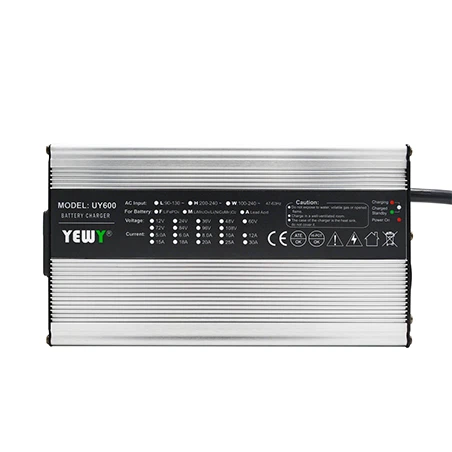
In addition to standard battery chargers for common rechargeable batteries, there are also specialized chargers for specific applications. For example, a Moped Battery Charger is designed to charge the large - capacity batteries used in mopeds. These chargers need to be able to deliver a high amount of power safely and efficiently.
Another example is the 60V Lithium Ion Battery Charger. This charger is specifically designed for high - voltage lithium - ion battery packs. It has advanced safety features to protect the battery from overcharging, over - discharging, and short - circuits.
Choosing the Right Battery Charger
When choosing a battery charger, it's crucial to consider the type of batteries you will be using. If you only have rechargeable batteries, make sure to choose a charger that is compatible with the specific chemistry and capacity of your batteries. Look for chargers with built - in safety features such as overcharge protection, short - circuit protection, and temperature control.
If you are unsure about which charger to choose, our team of experts is always available to help. We can provide you with detailed information about the chargers we offer and help you select the one that best suits your needs.
Conclusion
In conclusion, while a battery charger is primarily designed for rechargeable batteries, there are some rare cases where chargers claim to be compatible with non - rechargeable batteries. However, using a rechargeable charger with non - rechargeable batteries is generally not recommended due to the significant safety risks involved.
As a battery charger supplier, we are committed to providing our customers with high - quality chargers that are safe and reliable. Whether you need a charger for your mobile devices, power tools, or mopeds, we have a wide range of products to meet your needs.
If you are interested in purchasing our battery chargers or have any questions about our products, please feel free to contact us. We look forward to discussing your requirements and helping you find the perfect battery charger solution.

References
- "Battery Charging Handbook" by David Linden
- "Lithium - Ion Batteries: Science and Technologies" by Yoshio Nishi, Akihiro Ueda, and Masaki Yoshio