

Traveling abroad is an exciting adventure that allows us to explore new cultures, meet interesting people, and create unforgettable memories. However, it also comes with its fair share of challenges, especially when it comes to electronic devices. One common question that travelers often ask is, "Do I need a voltage converter for a battery charger when traveling abroad?" As a battery charger supplier, I'm here to provide you with all the information you need to make an informed decision.
Understanding Voltage and Power
Before we dive into the question of whether you need a voltage converter, it's important to understand the basics of voltage and power. Voltage, measured in volts (V), is the force that pushes electric current through a circuit. Different countries have different standard voltages for their electrical outlets. For example, in the United States and Canada, the standard voltage is 120V, while in most of Europe, Asia, and Africa, the standard voltage is 220 - 240V.
Power, measured in watts (W), is the rate at which electrical energy is consumed or produced. The power of a device can be calculated by multiplying the voltage by the current (P = V x I). When it comes to battery chargers, the power rating determines how quickly the charger can charge a battery.
Compatibility of Battery Chargers
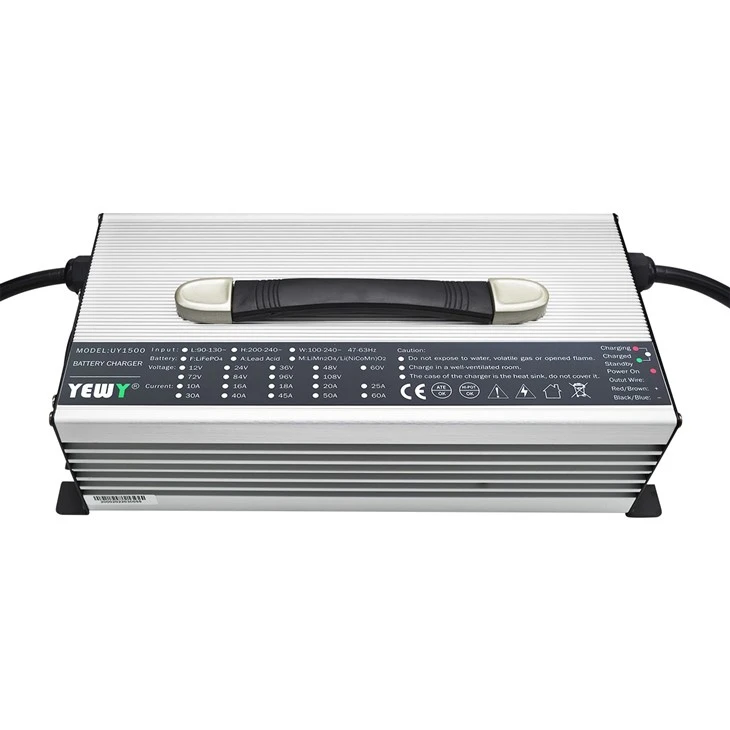
Most modern battery chargers are designed to be compatible with a wide range of voltages. These chargers are known as universal chargers or dual-voltage chargers. They typically have a voltage range of 100 - 240V, which means they can be used in almost any country without the need for a voltage converter. You can easily identify a universal charger by looking for the voltage range printed on the charger itself or on its packaging.
For example, our Lithium Battery Charger 48 Volt and Battery Charger 24v are both designed to be compatible with a voltage range of 100 - 240V. This makes them ideal for travelers who need to charge their batteries while abroad.

When You Need a Voltage Converter
While most modern battery chargers are universal, there are still some older or specialized chargers that are designed for a specific voltage. If your battery charger has a fixed voltage rating that does not match the voltage of the country you're traveling to, you will need a voltage converter.
Using a charger with the wrong voltage can have serious consequences. If the voltage is too low, the charger may not work at all or may charge the battery very slowly. On the other hand, if the voltage is too high, it can damage the charger, the battery, or even cause a fire.
Types of Voltage Converters
There are two main types of voltage converters: step-up converters and step-down converters. A step-up converter is used to increase the voltage from a lower level to a higher level. For example, if you're traveling from the United States (120V) to Europe (220 - 240V) and your charger is only rated for 120V, you will need a step-up converter.
A step-down converter, on the other hand, is used to decrease the voltage from a higher level to a lower level. If you're traveling from Europe to the United States with a charger that is rated for 220 - 240V, you will need a step-down converter.
Considerations When Using a Voltage Converter
When using a voltage converter, there are several factors you need to consider. First, make sure the converter has a high enough power rating to handle the charger. The power rating of the converter should be at least 20% higher than the power rating of the charger to ensure safe and efficient operation.
Second, pay attention to the type of plug. Different countries have different plug shapes and sizes. You may need to use a plug adapter in addition to the voltage converter to fit the electrical outlet in the country you're visiting.

Waterproof Battery Chargers for Special Situations
In some cases, you may need a battery charger that can withstand harsh environmental conditions. Our Waterproof Battery Chargers are designed for such situations. Whether you're traveling to a rainy destination or engaging in water sports, these chargers can keep your batteries charged safely.
Making the Right Decision
In conclusion, whether you need a voltage converter for your battery charger when traveling abroad depends on the compatibility of your charger. If your charger is a universal charger with a voltage range of 100 - 240V, you can usually use it without a voltage converter. However, if your charger has a fixed voltage rating that does not match the voltage of the country you're traveling to, you will need a voltage converter.

As a battery charger supplier, we offer a wide range of high-quality chargers that are designed to meet the needs of travelers. Our chargers are not only compatible with a wide range of voltages but also come with advanced features such as overcharge protection, short-circuit protection, and fast charging technology.
If you're interested in purchasing our battery chargers or have any questions about voltage converters, please feel free to contact us. We're always here to help you make the right choice for your travel needs.
References
- "Electrical Systems Around the World." World Standards Service Network.
- "How to Choose the Right Voltage Converter." Travel + Leisure.