

As a supplier of Golf Cart Battery Chargers, I often receive inquiries from customers about charger compatibility with their golf cart batteries. Ensuring that your charger is compatible with your battery is crucial for the longevity and performance of your golf cart's power system. In this blog post, I'll share some key factors to consider when determining charger - battery compatibility.
Voltage Matching
The first and most fundamental aspect of charger - battery compatibility is voltage matching. Golf cart batteries typically come in different voltage ratings, such as 6V, 8V, or 12V. Most golf carts use multiple batteries connected in series to achieve the desired voltage for the vehicle's operation. For example, a common setup might involve six 8V batteries connected in series to provide a total of 48V.
Your charger must be designed to output the correct voltage for your battery configuration. Using a charger with a voltage that is too high can cause overcharging, which leads to excessive heat generation, electrolyte loss, and ultimately, reduced battery life. On the other hand, a charger with a voltage that is too low will not be able to fully charge the batteries, leaving them under - charged and unable to provide the necessary power for the golf cart.
When you're checking the voltage of your battery and charger, look for the voltage specifications on the battery labels and on the charger unit itself. Make sure the charger's output voltage exactly matches the total voltage of your golf cart battery pack.
Amperage and Charging Speed
Amperage, measured in amperes (A), is another important factor in charger - battery compatibility. The amperage of a charger determines how quickly it can charge your battery. A higher amperage charger will charge the battery faster, but it may not be suitable for all batteries.

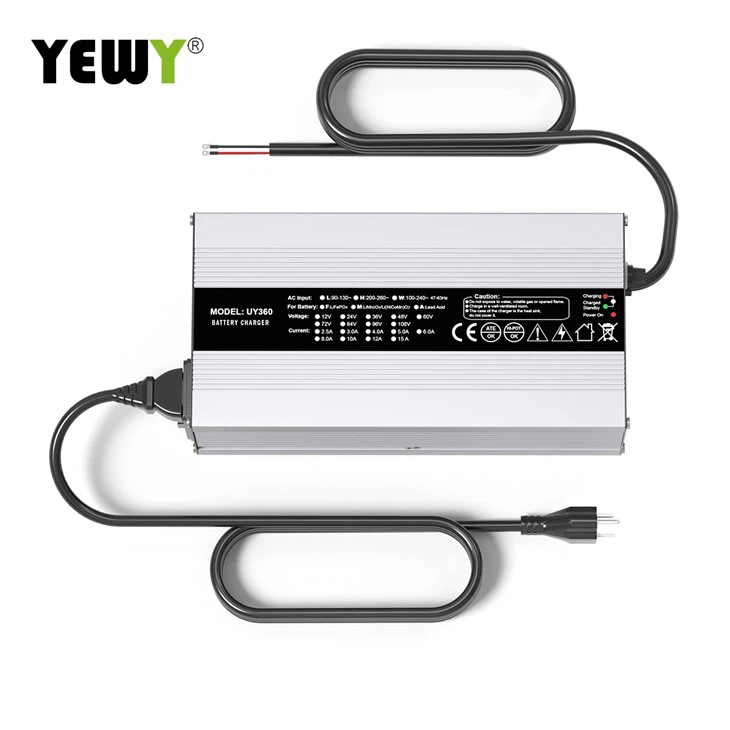
Batteries have a maximum charging current rating, which indicates the highest amperage at which they can be safely charged. Exceeding this rating can cause damage to the battery, such as overheating, plate damage, and reduced capacity. Therefore, it's essential to choose a charger with an amperage that is within the battery's recommended charging current range.
Some modern chargers come with adjustable amperage settings, which allow you to customize the charging speed according to your battery's needs. This feature can be particularly useful if you have different types of batteries or if you want to control the charging process more precisely.
Battery Type Compatibility
Golf cart batteries can be classified into different types, such as lead - acid batteries (including flooded lead - acid, sealed lead - acid, and AGM - Absorbent Glass Mat), lithium - ion batteries, and gel batteries. Each type of battery has its own unique charging requirements.
Lead - Acid Batteries: These are the most common type of golf cart batteries. Flooded lead - acid batteries require a specific charging profile that includes a bulk charging phase, an absorption charging phase, and a float charging phase. Chargers designed for flooded lead - acid batteries are usually equipped with the necessary circuitry to carry out these phases correctly. Sealed lead - acid and AGM batteries also have similar charging requirements but may be more sensitive to overcharging, so a charger with proper voltage regulation is crucial.
Lithium - Ion Batteries: Lithium - ion batteries offer several advantages over lead - acid batteries, such as higher energy density, longer lifespan, and lighter weight. However, they require a different charging algorithm compared to lead - acid batteries. Lithium - ion chargers are designed to maintain a constant voltage during the charging process and to cut off the charging when the battery reaches its full capacity to prevent overcharging.
Gel Batteries: Gel batteries are a type of sealed lead - acid battery that uses a gel - like electrolyte. They require a charger with a lower charging voltage and a slower charging rate compared to flooded lead - acid batteries to avoid damage to the gel electrolyte.
It's vital to use a charger that is specifically designed for the type of battery in your golf cart. Using an incompatible charger can not only damage the battery but also pose a safety risk, such as the risk of fire or explosion.
Connector and Physical Compatibility
In addition to electrical compatibility, you also need to consider the physical compatibility between the charger and the battery. The charger must have the correct connector that can be securely attached to the battery terminals.
There are different types of connectors used in golf cart batteries, such as spade connectors, ring terminals, and bullet connectors. Make sure the charger's connector matches the type of connector on your battery. If the connectors don't match, you may need to use an adapter, but it's important to ensure that the adapter is rated for the correct voltage and amperage to avoid any electrical issues.
Also, consider the physical size and design of the charger. You need to make sure that the charger can be easily installed in your golf cart or stored in a convenient location. Some chargers are designed to be portable, while others are more suitable for permanent installation.
Additional Features and Safety Considerations
Modern golf cart battery chargers often come with additional features that can enhance the charging process and ensure the safety of your batteries.
Automatic Shut - Off: A charger with an automatic shut - off feature will stop charging the battery once it reaches its full capacity. This helps to prevent overcharging and extends the battery's lifespan.
Temperature Compensation: Temperature can have a significant impact on the charging process. Batteries charge more efficiently at certain temperatures, and extreme temperatures can affect the battery's performance and lifespan. Chargers with temperature compensation adjust the charging voltage and current based on the battery's temperature, ensuring optimal charging under different environmental conditions.
Reverse Polarity Protection: This feature prevents damage to the charger and the battery in case the charger is connected to the battery with the wrong polarity. It's a simple but important safety feature that can save you from costly repairs.
Other Related Charger Products
If you're interested in battery chargers for other electric transportation vehicles, we also offer a wide range of products. For example, we have Electric Scooter Battery Chargers that are designed to meet the specific charging needs of electric scooters. These chargers are compact, efficient, and safe to use.
We also provide Motorbike Battery Chargers for motorbike enthusiasts. These chargers are built to handle the unique power requirements of motorbike batteries and come with advanced charging algorithms to ensure a long - lasting battery life.
In addition, our Low Speed Electric Vehicle Battery Chargers are suitable for various low - speed electric vehicles, providing reliable and efficient charging solutions.
Conclusion and Call to Action
Determining the compatibility between your golf cart battery charger and your battery is a multi - faceted process that involves considering voltage, amperage, battery type, connector, and additional features. By taking the time to ensure proper compatibility, you can maximize the performance and lifespan of your golf cart batteries.
If you're in the market for a new golf cart battery charger or have any questions about charger - battery compatibility, we're here to help. Our team of experts can provide you with detailed information and guidance to help you make the right choice. Contact us today to start the procurement discussion and find the perfect charger for your needs.
References
- Battery University. "How to Charge Different Battery Types."
- Golf Cart Maintenance Guides. Various editions.
- Electrical Engineering Textbooks on Battery Charging Systems.