

As a supplier of robot battery chargers, I often encounter customers who are unsure whether a particular charger is compatible with their robot. This is a crucial question because using an incompatible charger can not only lead to sub - optimal charging performance but also potentially damage the robot's battery and even the robot itself. In this blog, I will share some key factors to consider when determining charger compatibility.
Voltage and Current Ratings
The first and most fundamental aspect to check is the voltage and current ratings of both the robot's battery and the charger. The charger's output voltage must match the battery's rated voltage. For example, if your robot uses a 12 - volt battery, you need a charger that outputs 12 volts. Using a charger with a higher voltage can overcharge the battery, causing it to overheat, swell, and significantly reduce its lifespan. On the other hand, a charger with a lower voltage may not fully charge the battery, leaving your robot with insufficient power.

The current rating is also important. The charger's output current should be within the acceptable range for the battery. A high - current charger can charge the battery faster, but if the current is too high for the battery, it can cause excessive heat generation and damage the battery cells. Conversely, a charger with a very low current will take an unreasonably long time to charge the battery. You can usually find the battery's voltage and current requirements in the robot's user manual or on the battery label itself.
Battery Chemistry
Different types of batteries have different charging requirements based on their chemistry. Common battery chemistries used in robots include lead - acid, lithium - ion, and nickel - metal hydride (NiMH). Each type requires a specific charging algorithm to ensure safe and efficient charging.
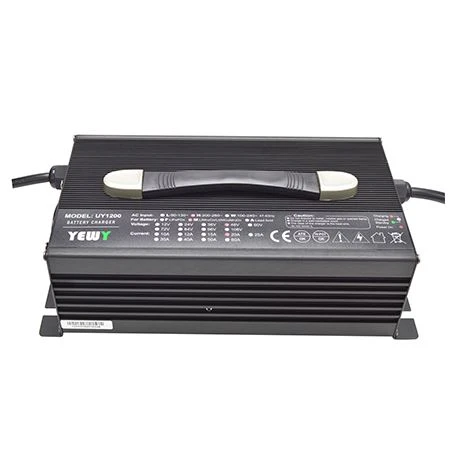
- Lead - acid Batteries: Lead - acid batteries are relatively common in some industrial and larger robots. They need a charger that can provide a constant - current and then a constant - voltage charging profile. Our Lead Acid Charger is specifically designed to meet the charging needs of lead - acid batteries. It can adjust the charging current and voltage according to the battery's state, preventing overcharging and undercharging.
- Lithium - ion Batteries: Lithium - ion batteries are popular due to their high energy density and long lifespan. However, they are very sensitive to overcharging and over - discharging. A compatible charger for lithium - ion batteries must have precise voltage and current control to maintain the battery's safety and performance.
- Nickel - metal Hydride (NiMH) Batteries: NiMH batteries require a different charging approach compared to lead - acid and lithium - ion batteries. They are prone to overheating during charging, so the charger needs to monitor the battery's temperature and adjust the charging process accordingly.
Charging Connectors
The physical connection between the charger and the robot's battery is another critical factor. The charger must have a connector that matches the battery's charging port. There are various types of connectors available, such as USB, XT60, and JST connectors. If the connectors don't match, you won't be able to connect the charger to the battery. In some cases, you may be able to use an adapter, but it's important to ensure that the adapter doesn't affect the electrical performance and safety of the charging process.
Communication Protocols
Some advanced robots and battery chargers use communication protocols to exchange information during the charging process. These protocols allow the charger to adjust the charging parameters based on the battery's state of charge, temperature, and other factors. For example, a charger may use a CAN (Controller Area Network) protocol to communicate with the robot's battery management system. If your robot uses a specific communication protocol, you need to make sure the charger is compatible with it.
Manufacturer Recommendations
Always refer to the robot's manufacturer recommendations regarding battery chargers. The manufacturer knows the specific requirements of their product and can provide guidance on which chargers are compatible. Using a charger recommended by the manufacturer can ensure that the charging process is safe and that the robot's warranty remains valid.
Testing Compatibility
If you're still unsure whether a charger is compatible with your robot, you can perform some basic tests. First, visually inspect the charger and the battery for any signs of damage or incorrect connections. Then, connect the charger to the battery and monitor the charging process. If the charger starts to overheat, the battery swells, or there are any unusual noises or smells, immediately disconnect the charger as this may indicate an incompatible setup.
Our Product Range
At our company, we offer a wide range of robot battery chargers to meet different needs. Our Smart Lead Acid Battery Charger is a great choice for robots using lead - acid batteries. It features intelligent charging algorithms that can adapt to the battery's state, ensuring optimal charging performance.
For electric motorbike scooters and some similar robots, our Electric Motorbike Scooter Battery Charger provides a reliable and efficient charging solution. It is designed to handle the specific voltage and current requirements of these types of batteries.
Conclusion
Determining the compatibility of a robot battery charger is a multi - faceted process that involves considering voltage and current ratings, battery chemistry, charging connectors, communication protocols, and manufacturer recommendations. By carefully evaluating these factors, you can ensure that you choose a charger that is safe, efficient, and suitable for your robot.
If you're in the market for a high - quality robot battery charger and need further assistance in selecting the right one for your specific robot, please feel free to contact us for a detailed consultation. We are committed to providing the best charging solutions for your robotic needs.
References
- Battery University. (n.d.). Understanding Battery Charging. Retrieved from [Battery University website].
- Manufacturer's manuals for various robots and battery chargers.