

Hey there! As a battery charger supplier, I've seen all sorts of questions about battery charging. One of the most common ones is how the charging time changes with different battery capacities. Well, let's dig into this topic and find out!
First off, let's understand what battery capacity means. Battery capacity is usually measured in ampere - hours (Ah). It tells you how much charge a battery can hold. For example, a 10Ah battery can supply a current of 1 ampere for 10 hours or 2 amperes for 5 hours.
Now, the charging time of a battery depends on a few key factors. The most important ones are the battery capacity and the charging current. The basic formula to calculate the charging time is: Charging Time (hours)=Battery Capacity (Ah)/Charging Current (A). But this is a very simplified formula. In real - world scenarios, there are other things to consider.
Let's start with small - capacity batteries. Say you have a battery with a capacity of 2Ah. These are often used in small devices like remote controls or some small toys. If you use a charger that provides a charging current of 0.5A, using our simple formula, the charging time would be 2Ah / 0.5A = 4 hours. But in reality, it might take a bit longer because there are losses during the charging process. The charger might not be 100% efficient, and there are also some chemical reactions inside the battery that take time to complete.
On the other hand, large - capacity batteries are a different story. For example, electric vehicles often use batteries with capacities in the hundreds of Ah. Let's say you have a battery with a capacity of 100Ah. If you use a charger with a charging current of 10A, the calculated charging time would be 100Ah / 10A = 10 hours. But again, this is just a rough estimate. High - capacity batteries generate more heat during charging, and the charger needs to be designed to handle this. Some chargers will reduce the charging current as the battery gets closer to full to prevent overcharging and damage to the battery.
Another factor that affects charging time is the type of battery. Lithium - ion batteries, which are very common these days, have different charging characteristics compared to lead - acid batteries. Lithium - ion batteries can generally accept a higher charging current without much damage, which means they can charge faster. Lead - acid batteries, on the other hand, are more sensitive to high charging currents and usually need a slower charging process to ensure a long lifespan.
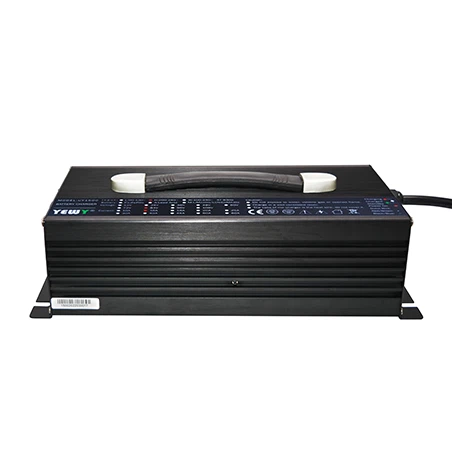
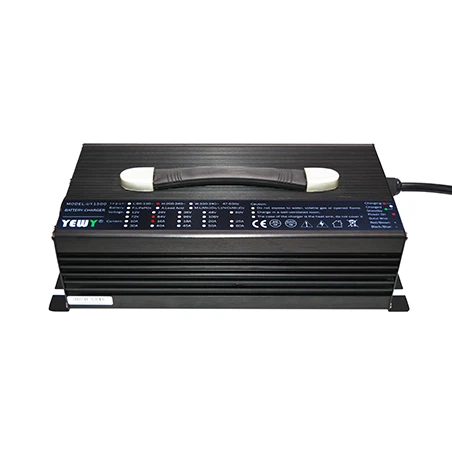
Now, let's talk about the chargers we offer. We have a wide range of chargers to suit different battery capacities. For small - capacity batteries, our Fully Automatic Battery Charger is a great choice. It's designed to automatically adjust the charging current based on the battery's state, which helps to prevent overcharging and extends the battery's lifespan.
For medium - to large - capacity batteries, like those used in some electric scooters or small boats, our 72v 23a Battery Charger is very popular. It can provide a relatively high charging current while still maintaining safety and efficiency.
If you have very large - capacity batteries, such as those used in industrial equipment or some high - end electric vehicles, our 12V 70A Battery Charger is up to the task. It's built to handle high - power charging and is designed with advanced safety features.
When choosing a charger, it's important to match the charger's specifications with the battery's requirements. Using a charger with too high a charging current can damage the battery, while a charger with too low a current will result in a very long charging time.
In conclusion, the charging time changes significantly with different battery capacities. Small - capacity batteries generally charge faster, but large - capacity batteries need more time and careful charging management. At our company, we understand these complexities and have developed chargers that are suitable for a wide range of battery capacities.
If you're in the market for a battery charger, whether it's for a small device or a large - scale application, we'd love to talk to you. Contact us to discuss your specific needs and we can help you find the perfect charger for your batteries.
References:
- Battery Charging Handbook: A Guide to Understanding and Optimizing Battery Charging, various industry experts
- Research papers on battery charging technologies from leading academic institutions