

When it comes to charging lithium iron phosphate (LiFePO4) batteries, understanding the differences between charging them in series and parallel is crucial. As a reputable Lifepo4 Battery Charger supplier, we are here to shed light on this important topic.
Basics of LiFePO4 Batteries and Charging
LiFePO4 batteries have gained popularity due to their high energy density, long cycle life, and enhanced safety features compared to other lithium - ion chemistries. However, to ensure their optimal performance and longevity, proper charging is essential.
Charging Batteries in Series
- Voltage and Current Characteristics
When charging LiFePO4 batteries in series, the voltage of the battery pack increases, while the current capacity remains the same as that of a single battery. For example, if you have four 12V LiFePO4 batteries connected in series, the total voltage of the battery pack will be 48V, but the amp - hour (Ah) rating will be the same as a single 12V battery.
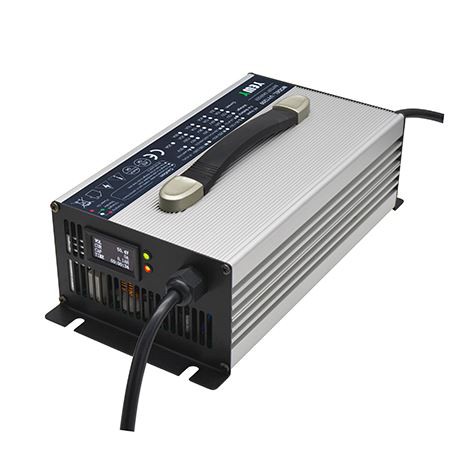
This requires a charger that can handle the higher voltage. Our Smart 48V 38A Lifepo4 Battery Charger is specifically designed for such high - voltage series - connected battery packs. It can provide a stable and safe charging current to the 48V battery configuration, ensuring that each battery in the series receives the appropriate charge.
- Balancing Requirements
One of the challenges in series charging is battery balancing. Since all batteries in series are charged with the same current, any slight difference in the internal resistance or state of charge (SOC) of individual batteries can lead to over - charging or under - charging of some batteries over time. This can significantly reduce the overall lifespan of the battery pack.
To address this issue, our chargers are equipped with advanced battery balancing circuits. These circuits monitor the voltage of each battery cell in the series and adjust the charging process accordingly to ensure that all cells reach a full charge simultaneously.

Charging Batteries in Parallel
- Voltage and Current Characteristics
Charging LiFePO4 batteries in parallel is different from series charging. When batteries are connected in parallel, the voltage of the battery pack remains the same as that of a single battery, while the current capacity (Ah) increases. For instance, if you connect four 12V 100Ah LiFePO4 batteries in parallel, the total voltage of the battery pack will still be 12V, but the total Ah rating will be 400Ah.
This means that a charger used for parallel - connected batteries should have a sufficient current output. Our 4s Lifepo4 Charger can be used in some parallel - charging scenarios where the voltage requirements are met, providing an appropriate current to charge the parallel - connected batteries effectively.
- Balancing Considerations
In parallel charging, the need for cell - to - cell balancing is less critical compared to series charging. Since the batteries are at the same voltage, the charge is distributed more evenly among them. However, it is still necessary to ensure that the chargers can handle the increased current demand safely.
Advantages and Disadvantages
Series Charging
-
Advantages
- Higher Voltage Output: Series - charging allows you to achieve a higher voltage, which is useful in applications such as electric vehicles and some industrial equipment that require a higher voltage power supply.
- Efficient for High - Voltage Applications: Chargers designed for series - connected batteries can be more efficient in delivering high - voltage power to the battery pack.
-
Disadvantages
- Complex Balancing Requirements: As mentioned earlier, series charging demands more sophisticated battery balancing mechanisms to ensure the health of each battery in the series.
- Single - Point of Failure: If one battery in the series fails, it can affect the entire battery pack's performance.
Parallel Charging
-
Advantages
- Increased Current Capacity: Parallel charging can significantly increase the current capacity of the battery pack, providing a longer - lasting power supply for applications that require high current, such as some power tools.
- Simpler Balancing: The need for complex cell - to - cell balancing is reduced, making the charging process relatively simpler.
-
Disadvantages
- Lower Overall Voltage: The voltage of the battery pack remains the same as a single battery, which may not be suitable for applications that need a high - voltage power source.
Selecting the Right Charger for Your Battery Configuration
When selecting a charger, it is important to consider the battery configuration (series or parallel) and the specific requirements of your application. If you are using a series - connected battery pack, choose a charger with a voltage rating that matches the total voltage of the series configuration and has effective battery - balancing capabilities.
For parallel - connected battery packs, ensure that the charger can supply the required current and is compatible with the voltage of the battery pack. Our Lifepo4 Charger 36v is a great option for some mid - voltage battery configurations, whether they are in series or parallel, as it offers a stable charging performance.
Conclusion
In conclusion, the differences between charging LiFePO4 batteries in series and parallel are significant. Each method has its own set of advantages and challenges, and the choice between them depends on the specific requirements of your application. As a professional Lifepo4 Battery Charger supplier, we offer a wide range of chargers to meet the diverse needs of different battery configurations. If you are unsure about which charger is best for your LiFePO4 battery setup, or if you have any other questions, we welcome you to contact us for further consultation and purchasing negotiations. We are committed to providing high - quality chargers and excellent customer service to ensure the optimal performance of your LiFePO4 batteries.
References
- "Lithium - ion Batteries: Science and Technologies" by Yoshio Maita, Akihiro Kozawa, and Masaki Yoshio.
- Manufacturer's specifications and technical documents for LiFePO4 batteries and chargers.