

As a well - established battery charger supplier, I often get asked about the charging process of lead - acid battery chargers. In this blog, I'll take you through the ins and outs of how these chargers work, so you can have a better understanding when choosing the right charger for your needs.
1. Understanding Lead - Acid Batteries
Before delving into the charging process, it's essential to understand the basics of lead - acid batteries. These batteries consist of lead plates submerged in an electrolyte solution of sulfuric acid and water. When the battery discharges, a chemical reaction occurs between the lead plates and the electrolyte, producing electrical energy. During charging, the process is reversed.
Lead - acid batteries come in different types, such as flooded lead - acid (FLA), sealed lead - acid (SLA), and valve - regulated lead - acid (VRLA). Each type has its own characteristics and charging requirements, but the fundamental charging principles remain similar.
2. The Charging Stages of a Lead - Acid Battery Charger
Bulk Charging
The first stage of the charging process is bulk charging. When a lead - acid battery is connected to the charger, the charger delivers a high current to the battery. This high - current flow rapidly replenishes a large portion of the battery's discharged capacity. During this stage, the battery voltage gradually rises, but it remains below the gassing voltage.
The goal of bulk charging is to get the battery as close to full charge as quickly as possible. For example, in a typical automotive lead - acid battery, the charger might supply a current of several amperes, depending on the charger's capacity. Our 40 Amp Battery Charger is well - suited for applications where a high - current bulk charging is required, such as charging large - capacity lead - acid batteries used in trucks or boats.
Absorption Charging
Once the battery voltage reaches the gassing voltage, the charger switches to the absorption charging stage. In this stage, the charger maintains a constant voltage while gradually reducing the charging current. The constant voltage helps to fully charge the battery cells and equalize the charge across all the cells.
During absorption charging, some gassing may occur in flooded lead - acid batteries. However, in sealed lead - acid batteries, the design allows for the recombination of the gases produced during charging, reducing the need for maintenance. This stage can take several hours, depending on the battery's state of charge and capacity.
Float Charging
After the absorption charging stage is complete, the charger enters the float charging stage. In this stage, the charger provides a low, constant voltage to the battery to maintain its full charge. The float voltage is carefully set to prevent overcharging while keeping the battery ready for use.
Float charging is particularly important for batteries that are in continuous standby use, such as those used in emergency backup systems. Our Smart Battery Charger is equipped with intelligent charging algorithms that can accurately adjust the charging voltage and current during the float charging stage, ensuring the long - term health of the battery.
3. Factors Affecting the Charging Process
Battery Temperature
Battery temperature has a significant impact on the charging process. As the temperature increases, the battery's internal resistance decreases, which can lead to an increase in the charging current. Conversely, at low temperatures, the internal resistance increases, and the battery may require a higher charging voltage to accept the same amount of current.
Most modern chargers are designed to compensate for temperature variations. Some chargers are equipped with temperature sensors that adjust the charging parameters based on the battery's temperature. This helps to prevent overcharging or undercharging due to temperature changes.
Battery State of Charge
The initial state of charge of the battery also affects the charging process. A deeply discharged battery will require a longer charging time compared to a partially discharged battery. During the charging process, the charger needs to be able to detect the battery's state of charge accurately to adjust the charging current and voltage accordingly.
Battery Age and Condition
As a battery ages, its capacity and performance may degrade. An old or damaged battery may not accept a full charge, or it may require a different charging profile. Chargers need to be able to adapt to the battery's age and condition to ensure safe and efficient charging.
4. Different Types of Lead - Acid Battery Chargers
Trickle Chargers
Trickle chargers are designed to provide a very low, continuous current to the battery. They are often used for long - term battery maintenance, such as keeping a vehicle's battery charged during periods of inactivity. Trickle chargers are simple and inexpensive but may not be suitable for quickly charging a deeply discharged battery.
Fast Chargers
Fast chargers, as the name suggests, are designed to charge a battery quickly. They deliver a high current during the bulk charging stage, reducing the overall charging time. However, fast charging can generate more heat and may require careful monitoring to prevent overcharging.
Smart Chargers
Smart chargers are the most advanced type of lead - acid battery chargers. They are equipped with microprocessors that can monitor the battery's voltage, current, and temperature. Based on this information, the charger can adjust the charging parameters in real - time, providing a safe and efficient charging process. Our Smart Battery Charger is a prime example of this technology, offering multiple charging modes and protection features.
Moped Battery Chargers
Specifically designed for moped batteries, Moped Battery Chargers are tailored to the unique requirements of these small - capacity lead - acid batteries. They usually have a lower charging current and are designed to fit the compact size and charging needs of moped batteries.
5. Importance of Choosing the Right Charger
Choosing the right lead - acid battery charger is crucial for the battery's performance and lifespan. An inappropriate charger can lead to overcharging, which can cause the battery to overheat, lose electrolyte, and reduce its capacity. Undercharging, on the other hand, can lead to sulfation, where lead sulfate crystals form on the battery plates, reducing the battery's ability to hold a charge.

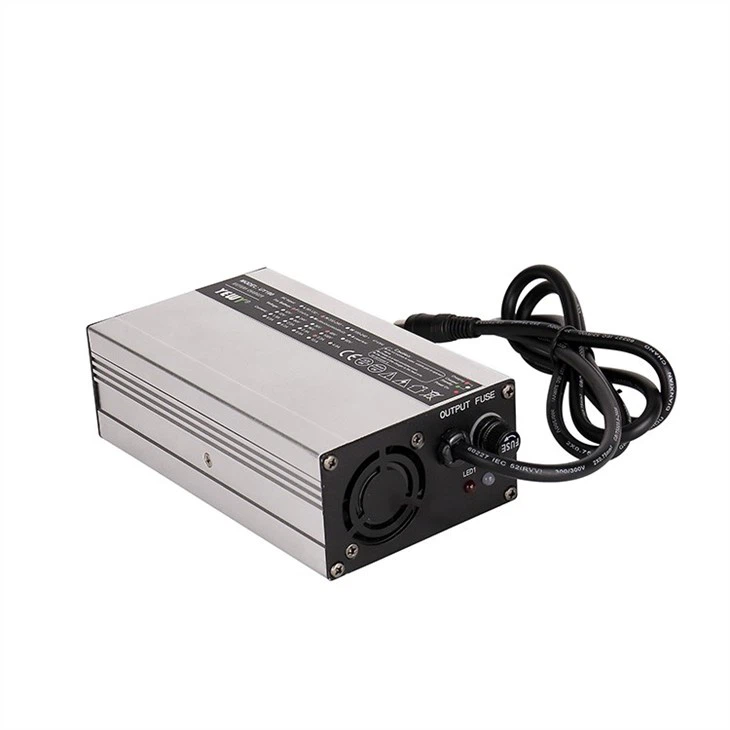
As a battery charger supplier, we understand the importance of providing high - quality chargers that are compatible with different types of lead - acid batteries. Our chargers are designed and tested to meet strict quality standards, ensuring safe and efficient charging for your batteries.
6. Conclusion and Call to Action
In conclusion, the charging process of a lead - acid battery charger involves multiple stages, including bulk charging, absorption charging, and float charging. Each stage plays a vital role in ensuring that the battery is fully charged and maintained in good condition. Factors such as temperature, state of charge, and battery age can affect the charging process, and different types of chargers are available to meet various needs.
If you're in the market for a lead - acid battery charger, we invite you to explore our range of products. Whether you need a Smart Battery Charger for advanced charging control, a Moped Battery Charger for your moped, or a 40 Amp Battery Charger for high - capacity applications, we have the right solution for you. Contact us to discuss your specific requirements and start a procurement negotiation.
References
- Linden, D., & Reddy, T. B. (2002). Handbook of Batteries. McGraw - Hill.
- McDowall, R. (2012). Battery Charging Basics. Battery University.