

Hey there! As a supplier of Lifepo4 4s chargers, I often get asked about the charging time for a Lifepo4 4s battery when using a charger with a different charging algorithm. So, I thought I'd write this blog to share some insights and clear up any confusion.
First off, let's understand what a Lifepo4 4s battery is. A Lifepo4 battery, also known as a lithium iron phosphate battery, is a type of rechargeable battery known for its high energy density, long cycle life, and safety features. The "4s" in Lifepo4 4s refers to a battery pack configuration where four single cells are connected in series. This setup typically results in a nominal voltage of around 14.4V.
Now, the charging time of a Lifepo4 4s battery can vary significantly depending on several factors, and one of the most crucial ones is the charging algorithm of the charger. Different chargers come with different charging algorithms, and these algorithms can have a huge impact on how fast your battery gets charged.
Constant - Current (CC) Charging Algorithm
The most common charging algorithm is the constant - current (CC) charging. In this method, the charger supplies a constant current to the battery until it reaches a certain voltage level. For a Lifepo4 4s battery, this voltage is usually around 14.6V. The advantage of this algorithm is that it allows for a relatively fast initial charge.
Let's say you have a Lifepo4 4s battery with a capacity of 10Ah and you're using a charger that can deliver a constant current of 2A. Using the formula (t=\frac{C}{I}) (where (t) is the time in hours, (C) is the capacity in amp - hours, and (I) is the current in amperes), in theory, it would take about 5 hours to charge the battery from 0% to 100% under ideal conditions. However, in real - world scenarios, there are losses due to heat and inefficiencies in the charging process, so it might take a bit longer, maybe around 5.5 to 6 hours.
If you're interested in a charger that uses this kind of algorithm, you can check out our 14.6 V Lifepo4 Charger. It's designed to provide a stable constant current to your Lifepo4 4s battery, ensuring a reliable and relatively fast charge.
Constant - Voltage (CV) Charging Algorithm
After the constant - current phase, most chargers switch to the constant - voltage (CV) charging phase. In this phase, the charger maintains a constant voltage across the battery terminals while the current gradually decreases as the battery approaches full charge. This phase is essential to prevent overcharging and to ensure the battery is safely and fully charged.
The time spent in the CV phase can be a bit tricky to calculate precisely. It depends on the battery's internal resistance, the state of charge when the CV phase starts, and the charger's specifications. Generally, the CV phase can take anywhere from 30 minutes to a couple of hours, depending on the battery and charger combination.
Multi - Stage Charging Algorithm
Some advanced chargers use a multi - stage charging algorithm. This algorithm combines multiple steps, including pre - charge, CC, and CV phases, and may also have additional steps for battery conditioning and equalization. These chargers are often more intelligent and can adapt to the battery's condition better.
For example, a charger might start with a low - current pre - charge if the battery is deeply discharged to prevent any potential damage. Then it moves on to the CC phase for a fast charge and finally to the CV phase for a full charge. Chargers with multi - stage algorithms can sometimes reduce the overall charging time compared to single - stage chargers, as they optimize the charging process at each stage.
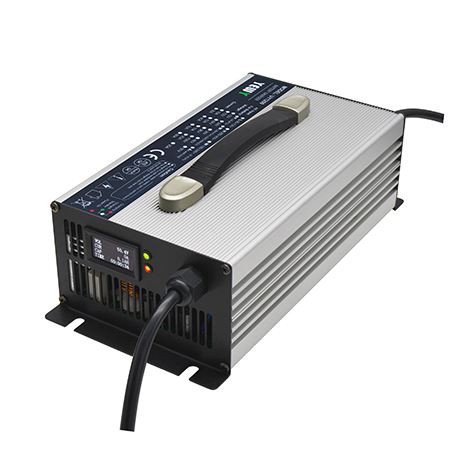
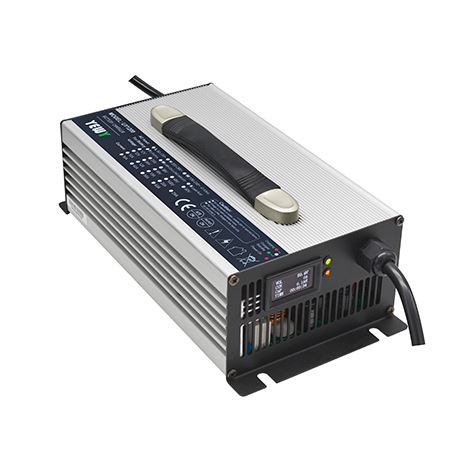
Our Intelligent 60V Lifepo4 Battery Charger is a great example of a charger with a multi - stage charging algorithm. It's designed to handle different battery states efficiently and can charge your Lifepo4 4s battery in a more optimized way.
Impact of Charger Output Current
Another factor that affects the charging time is the output current of the charger. A charger with a higher output current can charge the battery faster, but there are limits. You can't just use an extremely high - current charger because it might damage the battery. Lifepo4 batteries have a recommended maximum charging current, which is usually around 1C (where 1C means a current equal to the battery's capacity in amp - hours). So, for a 10Ah battery, the maximum safe charging current is around 10A.
If you use a charger with a lower output current, say 1A for our 10Ah battery, the charging time will be longer. Using the (t = \frac{C}{I}) formula, it would take about 10 hours to charge the battery from 0% to 100% under ideal conditions, plus some extra time for the CV phase.
Battery State of Health
The state of health (SOH) of the battery also plays a role in the charging time. A brand - new battery will charge more efficiently than an old or damaged battery. Over time, the internal resistance of the battery increases, which can slow down the charging process. If the battery has been over - discharged or over - charged in the past, it might also take longer to charge.
Temperature
Temperature is another important factor. Lifepo4 batteries charge best within a certain temperature range, usually between 0°C and 45°C. If the temperature is too low, the chemical reactions inside the battery slow down, and the charging process becomes slower. On the other hand, if the temperature is too high, it can cause safety issues and also affect the battery's performance and charging time.
Different Charger Voltages
For Lifepo4 4s batteries, using a charger with the correct voltage is crucial. A 36V charger is not suitable for a Lifepo4 4s battery as the nominal voltage of a 4s pack is around 14.4V. However, a charger with a slightly higher voltage, like our 14.6 V Lifepo4 Charger, is designed to fully charge the battery. Using a charger with the wrong voltage can lead to under - charging or over - charging, both of which can damage the battery and also affect the charging time.
In conclusion, the charging time of a Lifepo4 4s battery when using a charger with a different charging algorithm can vary widely. It depends on the charging algorithm itself, the charger's output current, the battery's state of health, temperature, and the charger's voltage. As a Lifepo4 4s charger supplier, we offer a range of chargers with different features and charging algorithms to meet your specific needs. Whether you need a fast - charging solution or a charger that can handle different battery states, we've got you covered.
If you're in the market for a Lifepo4 4s charger, or if you have any questions about charging times or our products, feel free to reach out. We're always here to help you make the right choice for your battery charging needs. You can also explore our Lifepo4 Charger 36v if you have other battery requirements.
So, don't hesitate to contact us for more information and let's start a great partnership in the world of battery charging!
References
- Batteries and Fuel Cells for Emerging Electric Vehicle Markets, edited by John Newman and Karen E. Thomas - Abraham.
- Lithium - Ion Batteries: Science and Technologies by Yoshio Nishi, Akihiro Kozawa, and Masaki Yoshio.