

Determining the appropriate size of a battery charger for your forklift is a crucial decision that can significantly impact the performance, longevity, and efficiency of your equipment. As a leading supplier of battery chargers for forklifts, we understand the complexities involved in this process and are here to guide you through it.
Understanding Forklift Battery Basics
Before delving into the specifics of charger sizing, it's essential to have a basic understanding of forklift batteries. Forklifts typically use lead - acid batteries, which come in various voltages and capacities. The voltage of a forklift battery is determined by the number of cells connected in series. Common voltages for forklift batteries range from 12V to 80V, with 24V, 36V, and 48V being the most prevalent.
The capacity of a battery is measured in amp - hours (Ah). This represents the amount of charge the battery can deliver over a specified period. For example, a 100Ah battery can theoretically deliver 1 amp of current for 100 hours or 10 amps for 10 hours.
Factors Influencing Charger Size
Battery Voltage
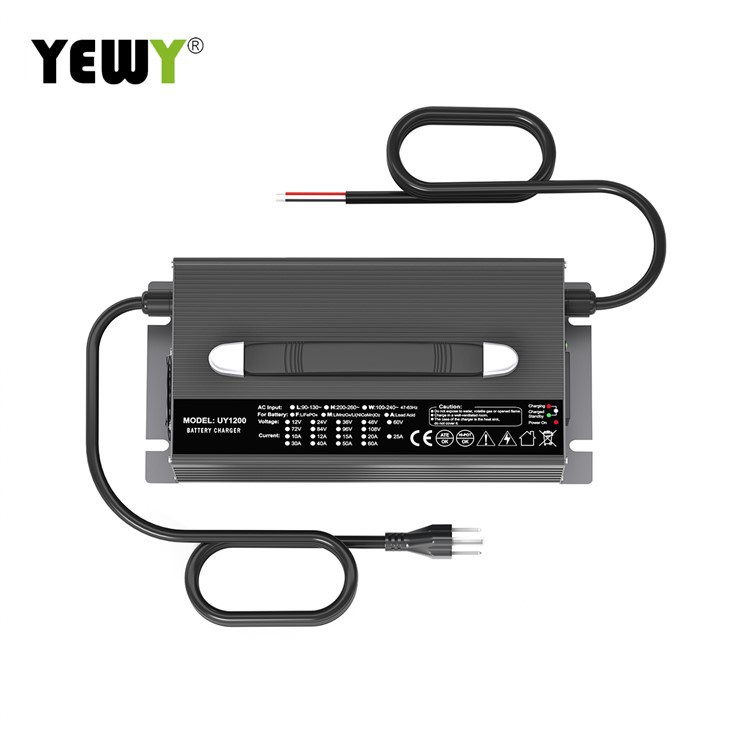
The charger you choose must match the voltage of your forklift battery. Using a charger with the wrong voltage can lead to overcharging, undercharging, or even damage to the battery. For instance, if your forklift battery is 48V, you need a 48V charger. Our Automatic Battery Charger is available in a variety of voltage options to ensure compatibility with different forklift batteries.
Battery Capacity
The charger's output current, measured in amps, should be appropriate for the battery's capacity. A general rule of thumb is that the charger's output current should be between 10% - 20% of the battery's amp - hour rating. For example, if you have a 200Ah battery, a charger with an output current of 20 - 40 amps would be suitable. However, this is just a starting point, and other factors may influence the optimal charger size.

Forklift Usage Patterns
The frequency and intensity of forklift use play a significant role in determining the charger size. If your forklifts are in continuous operation, you may need a charger with a higher output current to reduce charging time. On the other hand, if the forklifts have long periods of inactivity between uses, a charger with a lower output current may be sufficient.
Charging Time Requirements
The amount of time you have available for charging also affects the charger size. If you need to quickly recharge the battery during short breaks, a high - amperage charger is necessary. For example, a fast - charging charger can significantly reduce the charging time but may require more power and can be more expensive. Our Smart Lead Acid Battery Charger is designed to optimize charging time while protecting the battery from overcharging.
Calculating the Right Charger Size
To calculate the appropriate charger size, follow these steps:
- Identify the battery voltage: Check the battery label or the forklift's manual to determine the battery voltage.
- Determine the battery capacity: Find the amp - hour rating of the battery.
- Calculate the recommended charger output current: Multiply the battery capacity by 0.1 and 0.2 to get the lower and upper limits of the recommended charger output current. For example, if the battery capacity is 300Ah, the recommended charger output current would be between 30 amps (300Ah x 0.1) and 60 amps (300Ah x 0.2).
- Consider other factors: Take into account the forklift usage patterns and charging time requirements. If fast charging is needed, you may choose a charger with an output current closer to the upper limit.
Types of Chargers and Their Suitability
Trickle Chargers
Trickle chargers are designed to provide a low, constant current to the battery over an extended period. They are ideal for maintaining the charge of a battery during long periods of inactivity. Our Lead Acid Trickle Charger is a great option for forklifts that are not used frequently.
Automatic Chargers
Automatic chargers are more sophisticated and can adjust the charging current and voltage based on the battery's state of charge. They are suitable for most forklift applications as they can prevent overcharging and ensure a full charge. Our automatic chargers are equipped with advanced charging algorithms to optimize the charging process.
Fast Chargers
Fast chargers can significantly reduce the charging time by providing a high - amperage current. However, they may generate more heat and require more power. Fast chargers are suitable for forklifts that are in continuous operation and need to be quickly recharged during short breaks.
Importance of Choosing the Right Charger
Choosing the right size battery charger for your forklift is not just about convenience; it has a direct impact on the battery's performance and lifespan. An undersized charger will take a long time to charge the battery, which can disrupt your operations. It may also not fully charge the battery, leading to reduced forklift performance.
On the other hand, an oversized charger can overcharge the battery, causing excessive heat generation, water loss, and premature battery failure. Overcharging can also lead to the formation of lead sulfate crystals on the battery plates, which can reduce the battery's capacity and efficiency.
Maintenance and Safety Considerations
Proper maintenance of the battery charger is essential to ensure its longevity and safe operation. Regularly inspect the charger for any signs of damage, such as frayed wires or loose connections. Keep the charger clean and dry, and store it in a cool, well - ventilated area.
When using the charger, follow all safety instructions provided in the user manual. Avoid overloading the charger, and do not use it in a wet or flammable environment. If you notice any abnormal behavior, such as excessive heat or strange noises, stop using the charger immediately and contact a professional for assistance.
Conclusion
Selecting the right size battery charger for your forklift is a critical decision that requires careful consideration of several factors, including battery voltage, capacity, forklift usage patterns, and charging time requirements. As a supplier of high - quality battery chargers for forklifts, we are committed to helping you make the best choice for your specific needs.
If you are unsure about which charger is right for your forklift, our team of experts is here to assist you. We can provide personalized recommendations based on your forklift's specifications and your operational requirements. Contact us today to start the conversation about your battery charger needs and take the first step towards optimizing your forklift's performance and battery lifespan.
References
- Battery Council International (BCI). "Battery Basics."
- Forklift Industry Standards and Guidelines.
- Manufacturer's Manuals for Forklift Batteries and Chargers.