

Hey there! As a supplier of battery chargers for forklifts, I often get asked about the efficiency of these chargers. So, I thought I'd take a moment to break it down for you.
First off, let's talk about what efficiency actually means in the context of a forklift battery charger. Efficiency is basically a measure of how well the charger can convert electrical energy from the power source into chemical energy stored in the battery. In simpler terms, it's about getting the most bang for your buck when it comes to charging your forklift's battery.
A high - efficiency charger is going to waste less energy as heat during the charging process. This not only saves you money on your electricity bill but also helps to extend the lifespan of the charger itself. When a charger is constantly generating a lot of heat, it puts extra stress on its components, which can lead to premature wear and tear.
Now, what factors affect the efficiency of a forklift battery charger?
1. Charging Technology
Modern chargers use advanced charging technologies like pulse charging and multi - stage charging. Pulse charging sends short bursts of high - current electricity to the battery, which can help to break up sulfate crystals that form on the battery plates over time. This improves the battery's ability to accept a charge and can increase the overall efficiency of the charging process.
Multi - stage charging, on the other hand, adjusts the charging current and voltage based on the state of the battery. For example, in the initial stage, it might supply a high current to quickly charge the battery to a certain level. Then, as the battery gets closer to being fully charged, it reduces the current to prevent overcharging. This kind of intelligent charging can significantly improve efficiency.
If you're interested in a charger with advanced technology, check out our 60 Volt Lead Acid Battery Charger. It uses the latest charging algorithms to ensure efficient and safe charging of your forklift's battery.
2. Battery Type
Different types of batteries have different charging requirements, and this can impact the efficiency of the charger. For instance, lead - acid batteries are the most common type used in forklifts. They are relatively inexpensive and have a high energy density. However, they require a specific charging profile to maintain their performance.
Gel batteries, on the other hand, are more sensitive to overcharging and require a charger that can provide a precise charging voltage. Our intelligent 24V gel battery charger is designed specifically for gel batteries, ensuring that they are charged efficiently and safely.
3. Charger Design and Build Quality
The physical design of the charger and the quality of its components also play a role in its efficiency. A well - designed charger will have good heat dissipation, which helps to keep the internal components cool. This is important because heat can cause electrical resistance, which in turn reduces the charger's efficiency.

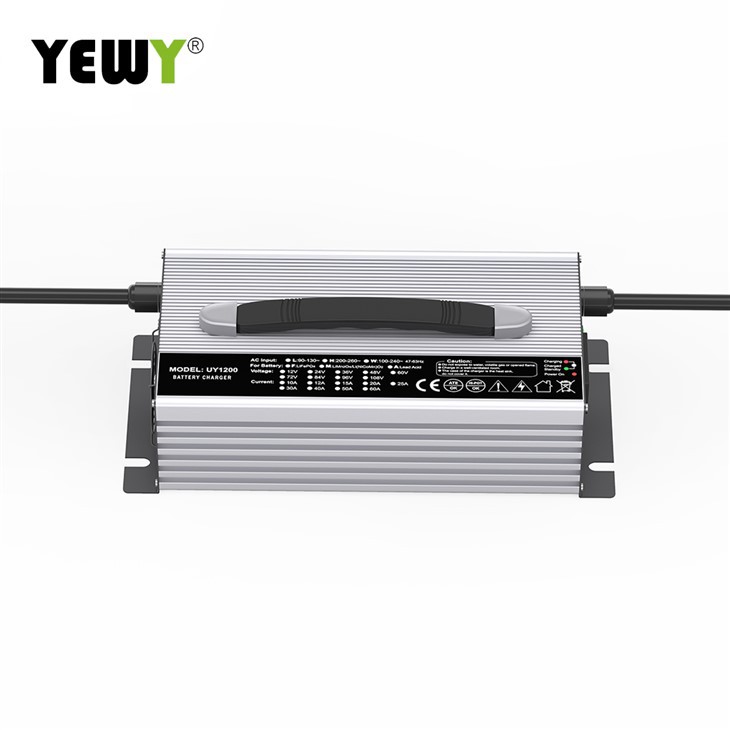
High - quality components, such as high - grade capacitors and transformers, can also contribute to better efficiency. These components are more reliable and can handle the electrical load more effectively.
4. Operating Conditions
The environment in which the charger operates can have an impact on its efficiency. For example, if the charger is located in a hot and humid area, it may have to work harder to dissipate heat, which can reduce its efficiency. Similarly, if the power supply is unstable or has a lot of electrical noise, it can affect the charger's performance.
So, how can you measure the efficiency of a forklift battery charger?
One way is to look at the charger's power factor. The power factor is a measure of how effectively the charger uses the electrical power it draws from the grid. A power factor of 1 means that the charger is using all of the electrical power it receives, while a lower power factor indicates that some of the power is being wasted.
Another way is to calculate the energy efficiency ratio (EER). This is the ratio of the energy stored in the battery to the energy consumed by the charger during the charging process. A higher EER means that the charger is more efficient.
At our company, we understand the importance of efficiency when it comes to forklift battery chargers. That's why we offer a wide range of chargers that are designed to be as efficient as possible. Whether you're looking for a charger for a small electric forklift or a large industrial one, we have the right solution for you.
In addition to forklift battery chargers, we also offer Electric Motorbike Scooter Battery Charger for those of you who are in the market for chargers for other types of vehicles.
If you're interested in learning more about our products or have any questions about the efficiency of our chargers, don't hesitate to reach out. We're here to help you make the best choice for your charging needs. Whether you're a small business owner or part of a large logistics company, we can provide you with the right charger to keep your operations running smoothly.
Contact us today to start a conversation about your battery charger requirements. We look forward to working with you to find the most efficient and reliable charging solution for your forklifts and other vehicles.
References:
- Battery Charging Handbook: A Guide to Charging Lead - Acid Batteries
- Principles of Electric Vehicle Battery Charging Technology